Breast Milk Storage Rules Every New Mom Should Save

If you’re pumping breast milk, there’s one question that always seems to come up at the worst possible moment:
“Wait… can I still use this milk?”
Maybe you pumped before leaving the house. Maybe there’s a half-finished bottle on the table. Maybe you found a milk bag at the back of the freezer and can’t remember how long it has been there.
Breast milk is precious, and no mom wants to waste it. But safe storage matters too. This simple guide covers the breast milk storage rules every new mom should save, based mainly on current guidance from the U.S. Centers for Disease Control and Prevention (CDC).
Quick note: Different health authorities can publish slightly different storage limits. For example, NHS guidance differs from CDC guidance in some fridge-storage situations. For a simple, consistent rule throughout this article, I’m using the CDC recommendations unless otherwise stated.
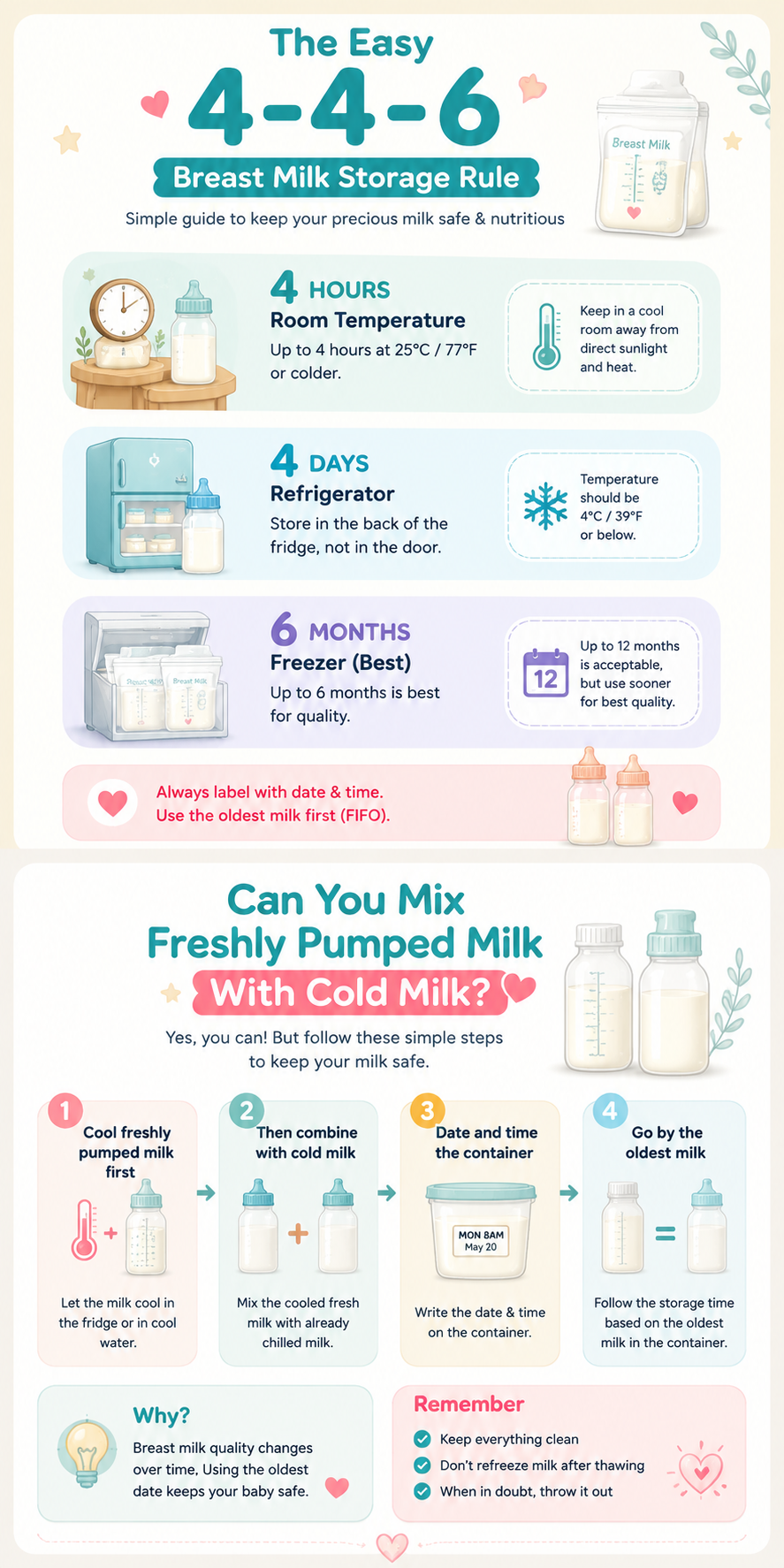
For moms living in Singapore, Malaysia, Myanmar, or other hot climates, be extra careful with the “4 hours at room temperature” rule. A warm room, parked car, outdoor setting, or non-air-conditioned space may be hotter than the CDC’s 25°C / 77°F condition. In warmer conditions, it is safer to chill milk promptly rather than assume the full four-hour window applies.
Fact 1: Freshly Pumped Breast Milk at Room Temperature
Freshly expressed breast milk can stay at room temperature for up to 4 hours when the temperature is 25°C / 77°F or colder, according to CDC guidance. The CDC also notes that milk should be refrigerated promptly if you do not expect to use it within four hours.
A real-life example
You pump at 8:00 AM and leave the milk in a room that stays at or below 25°C. Under the CDC guideline, the milk should be used or properly stored by around 12:00 PM.
But if you are sitting outdoors in Singapore heat, travelling without reliable cooling, or leaving milk in a warm car, don’t treat that as the same situation as a cool indoor room.
Mom tip: Write the pumping time on the container immediately. Sleep-deprived memory is not a storage system.
Fact 2: Breast Milk in the Refrigerator
Freshly pumped breast milk can be stored in the refrigerator for up to 4 days under CDC guidance. If you do not think you will use the milk within four days, freezing it sooner is better for protecting quality. Where you place it matters too.
Avoid storing breast milk in the refrigerator door. The temperature changes more often when the door opens and closes. The CDC recommends keeping milk toward the back of the refrigerator or freezer, where temperatures are more stable.
A simple fridge organization method
Use the oldest milk first.If you pumped:
- Monday
- Tuesday
- Wednesday
Use Monday’s milk before Tuesday’s milk. This simple “first in, first out” habit can reduce forgotten milk and unnecessary waste.
Fact 3: How Long Can You Freeze Breast Milk?
For frozen breast milk, aout 6 months is best for quality, while up to 12 months is acceptable.
When freezing breast milk, leave some space at the top of the container because milk expands as it freezes. The CDC also recommends freezing smaller portions—roughly 2 to 4 ounces—to help reduce waste.
For busy moms, smaller portions can be especially useful. You can thaw what your baby is likely to need instead of defrosting a large amount and potentially wasting the rest.
Fact 4: Thawed Breast Milk Has Different Rules
This is one of the easiest rules to forget.
Once frozen breast milk is fully thawed in the refrigerator, use it within 24 hours. Importantly, the CDC says the 24-hour countdown starts when the milk is completely thawed, not when you first move it from the freezer into the fridge.
Once breast milk has been brought to room temperature or warmed, use it within 2 hours.
And one major rule: Do not refreeze breast milk after it has completely thawed.
Pumping on the Go? Keep Breast Milk Cool with Momcozy
For working moms, travel days, or long hours outside the home, storing freshly pumped milk safely can be stressful. The Momcozy Breast Milk Cooler Bottle is designed to help keep breast milk cold while you’re away from a refrigerator—making it useful for work, outings, travel, or pumping on the go.
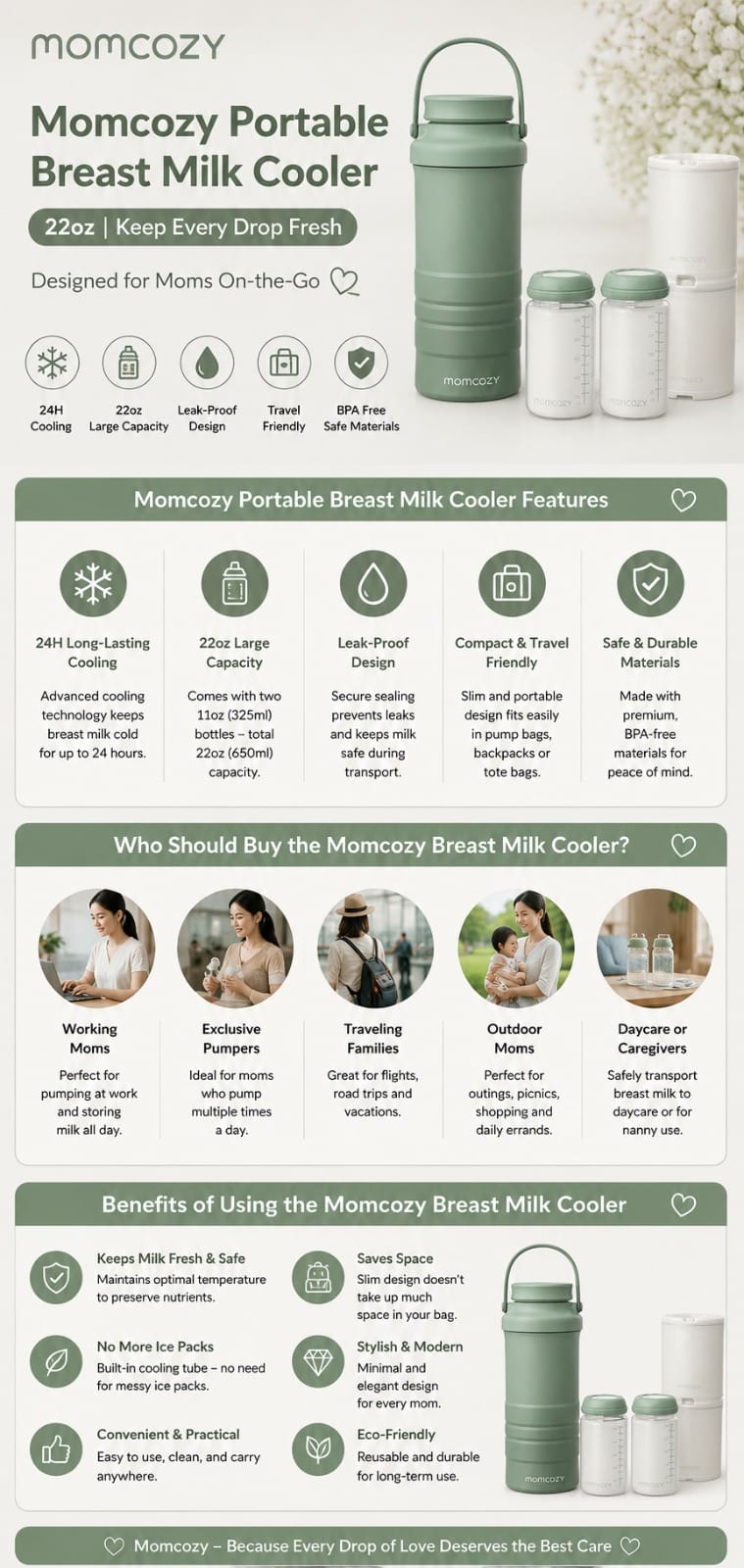
Instead of carrying a bulky cooler bag, you can store and transport pumped milk in a more compact setup. Just remember: always follow the product’s cooling instructions and safe breast milk storage guidance.
👉 Buy Now with Promo : Click Here
The Safest Way to Thaw Frozen Breast Milk
The CDC recommends several safe options:
- Move frozen milk to the refrigerator and let it thaw overnight.
- Place the sealed container in lukewarm water.
- Hold the sealed container under lukewarm running water.
Never thaw or heat breast milk in a microwave. Microwaving can create hot spots that may burn a baby’s mouth, and it can damage some nutrients in the milk
Comments ()